The Grid
After the discovery of Quantum Displacement, humanity has spread across eighty-two planets within three hundred light-years of Earth.
Travel, trade, and communication depend on the Grid, a vast interstellar transport network managed by ALICE, an autonomous artificial intelligence that continues to expand the network, explore space, and terraform new worlds.
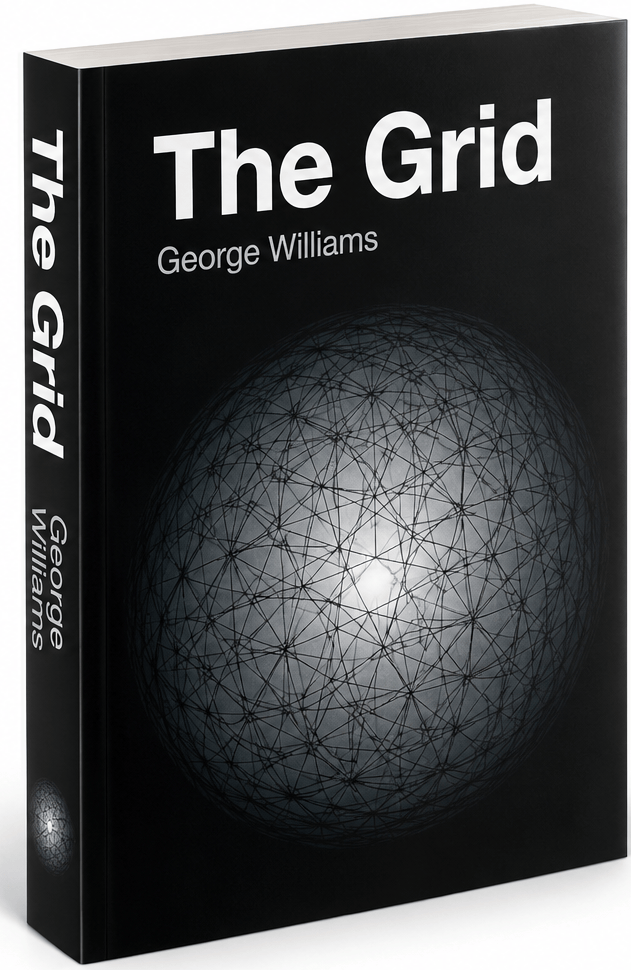
Across those worlds, authoritarian states and corporations maintain a fragile balance of power, threatened by rivalry, war, and dangers no one yet understands. To those who rule, people are nothing more than assets.
Separated by light-years and unaware of one another, seemingly unrelated lives begin to converge as that balance starts to shift.
What makes the grid distinctive?
A fully interconnected interstellar civilization.
Eighty-two worlds across 300 light-years form not merely a setting, but a functioning political, economic and technological system built around the Grid.
Artificial intelligence as civilization-scale infrastructure
ALICE is more than an AI character: it manages the network on which travel, trade and communication depend, while expanding humanity’s reach into space.
An ensemble story whose connections gradually emerge
Separate lives, worlds and conflicts initially appear unrelated. Their connections and significance become increasingly apparent as the larger story unfolds.
A technologically transformed but recognizably human future
Future societies remain rooted in historical cultures, while power, ideology, corporate interests and human ambition continue to shape civilization.
Epic scope across genres
The Grid combines hard science fiction and large-scale worldbuilding with political intrigue, military conflict and thriller elements.
Audience
The Grid may appeal to readers interested in the scale and political worldbuilding associated with works such as Dune, Foundation and Game of Thrones, combined with the technological and societal questions characteristic of modern hard science fiction.
